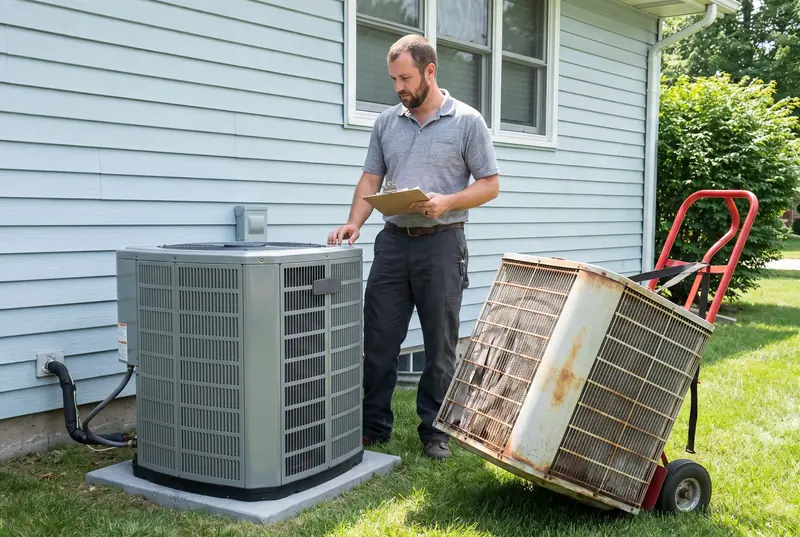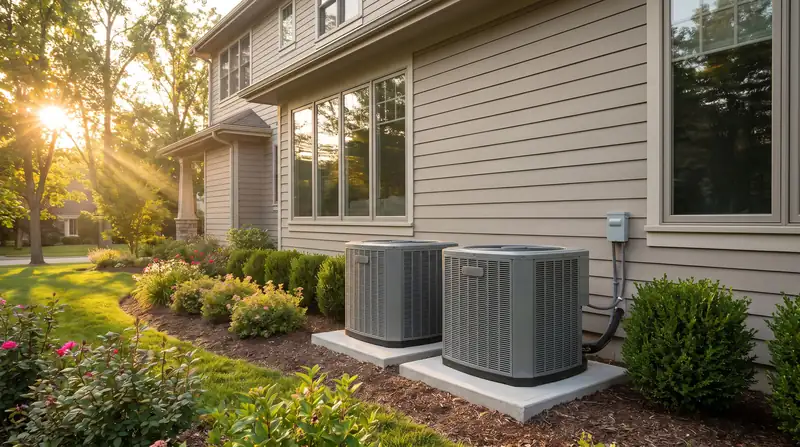

There comes a point when keeping an old system running costs more than replacing it, and finding that point takes honest arithmetic rather than a sales pitch. For most homes in Birmingham, AL, the clues cluster: rising amp draw on a tired compressor, a heat exchanger flagged at inspection, refrigerant that keeps disappearing from an R-22 or early R-410A system, and bills that grow as comfort shrinks. When a major repair lands on equipment past the twelve-to-fifteen-year mark, it is usually a stopgap on technology that already trails current SEER2 and AFUE standards.
The repairs homeowners call us about most are AC Repair and Furnace Repair. That's the place to start if you need a fix today.
Warning Signs for HVAC Replacement
The sooner you notice these red flags, the easier and cheaper the fix. These are the signals our technicians see most often:
- Repair bills stacking up faster, each larger than the one before
- Persistent comfort problems that no repair has solved
- Your equipment is over twelve to fifteen years old and breaking down more often
- Utility costs creeping up every season while your habits stay the same
- Corrosion and soot marks growing on the equipment
- A major compressor or heat exchanger problem on an older system
- A system so noisy you hear every start and stop
- Refrigerant leaks that need recharging too often, or an R-22 system
Early Action Saves Money
A failing capacitor, clogged condensate drain, or dirty flame sensor rarely fixes itself and usually gets more expensive to address the longer it runs. Call (659) 276-7527 at the first sign of trouble.